




Ce qui se transforme
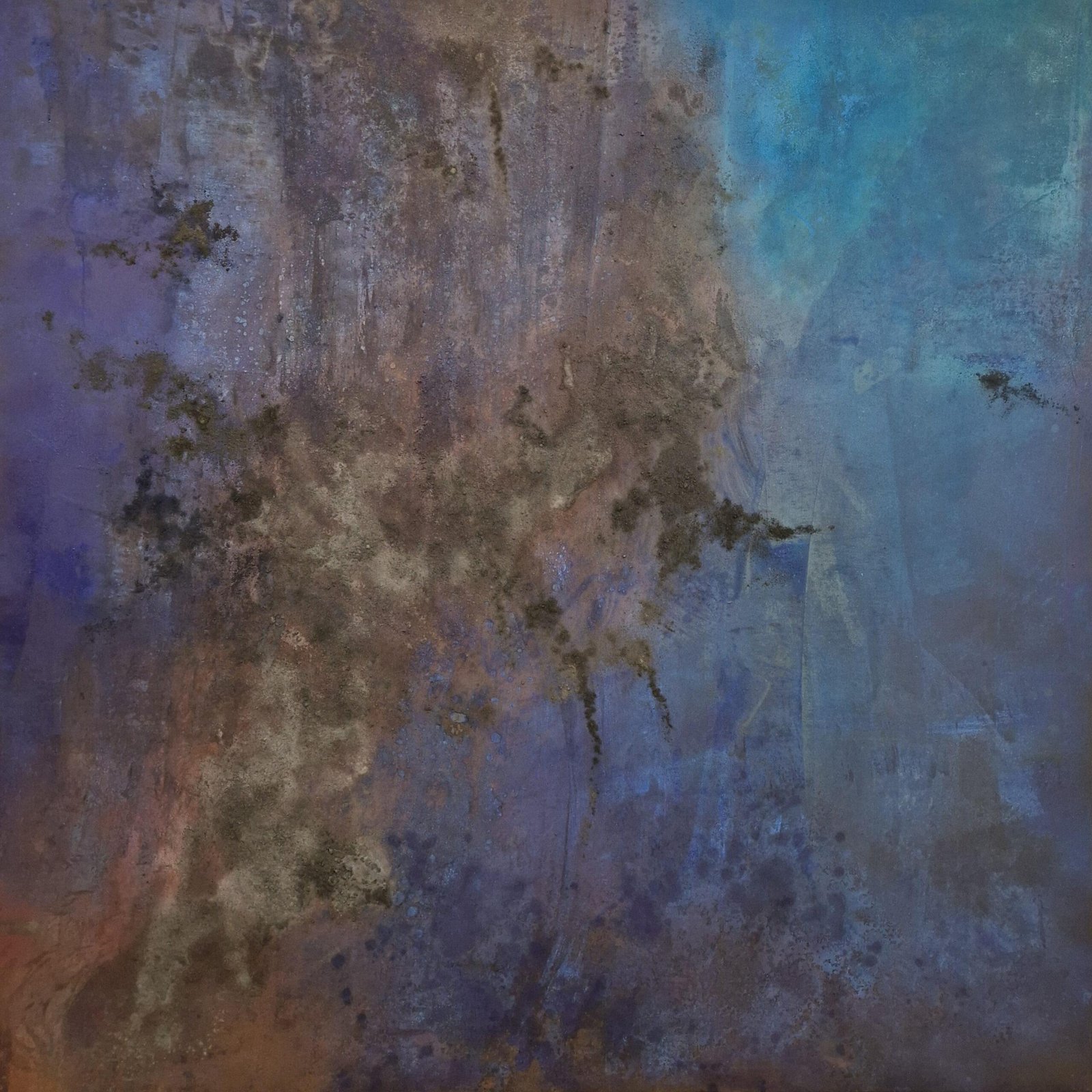
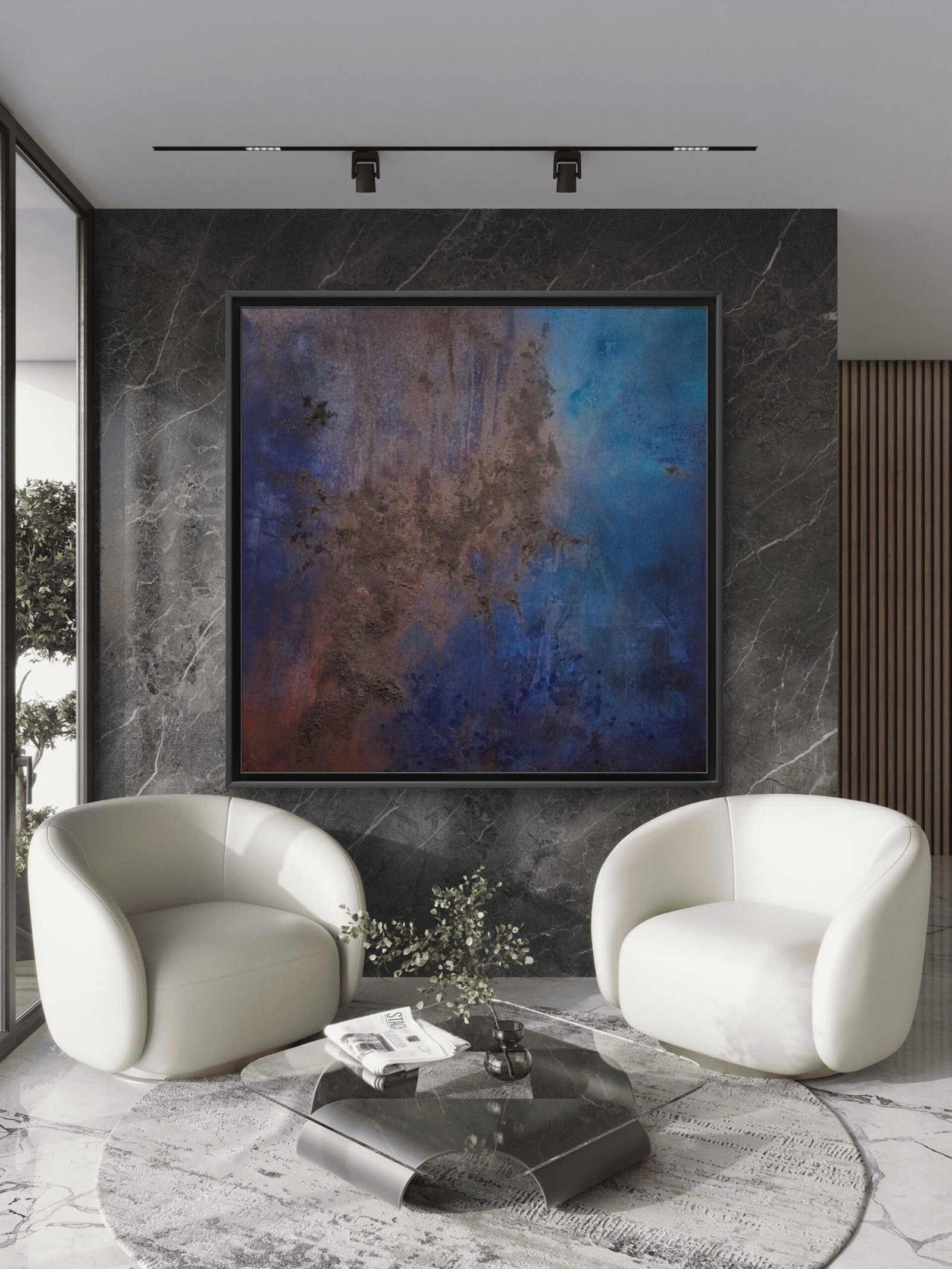
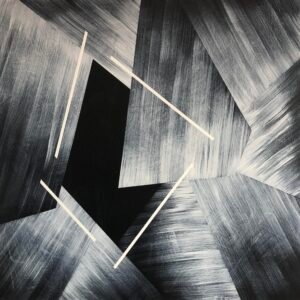
Dans cette œuvre issue du Cycle Intérieur, la matière semble traverser un état de bascule. Rien n’y est totalement stable : les surfaces se chargent, s’érodent, se déposent à nouveau. Les pigments, les traces minérales et les zones d’oxydation coexistent dans une tension silencieuse entre apparition et disparition. La lumière affleure par endroits, mais elle reste retenue, comme enfouie sous les strates du temps.
La composition ne cherche pas l’équilibre immédiat. Elle conserve les marques d’un passage, d’une altération lente, d’un mouvement intérieur encore en cours. La matière ne s’effondre pas ; elle change d’état.
Deuxième volet du cycle, Ce qui se transforme occupe cet espace fragile entre ce qui demeure et ce qui s’ouvre. Un territoire de mutation, où l’ancien n’a pas totalement disparu et où le nouveau n’a pas encore pris toute sa forme.
Ici, la matière devient passage.
—
What Transforms
In this work from the Inner Cycle, the material seems to pass through a state of transition. Nothing here is entirely stable: surfaces accumulate, erode, and settle again. Pigments, mineral traces, and areas of oxidation coexist within a silent tension between appearance and disappearance. Light emerges in places, yet remains restrained, as though buried beneath the strata of time.
The composition does not seek immediate balance. It preserves the marks of a passage, of a slow alteration, of an inner movement still unfolding. The material does not collapse; it changes state.
As the second chapter of the cycle, What Transforms inhabits this fragile space between what remains and what opens. A territory of mutation, where the old has not entirely disappeared and the new has not yet fully taken shape.
Here, the material becomes passage.






Avis
Il n’y a pas encore d’avis.